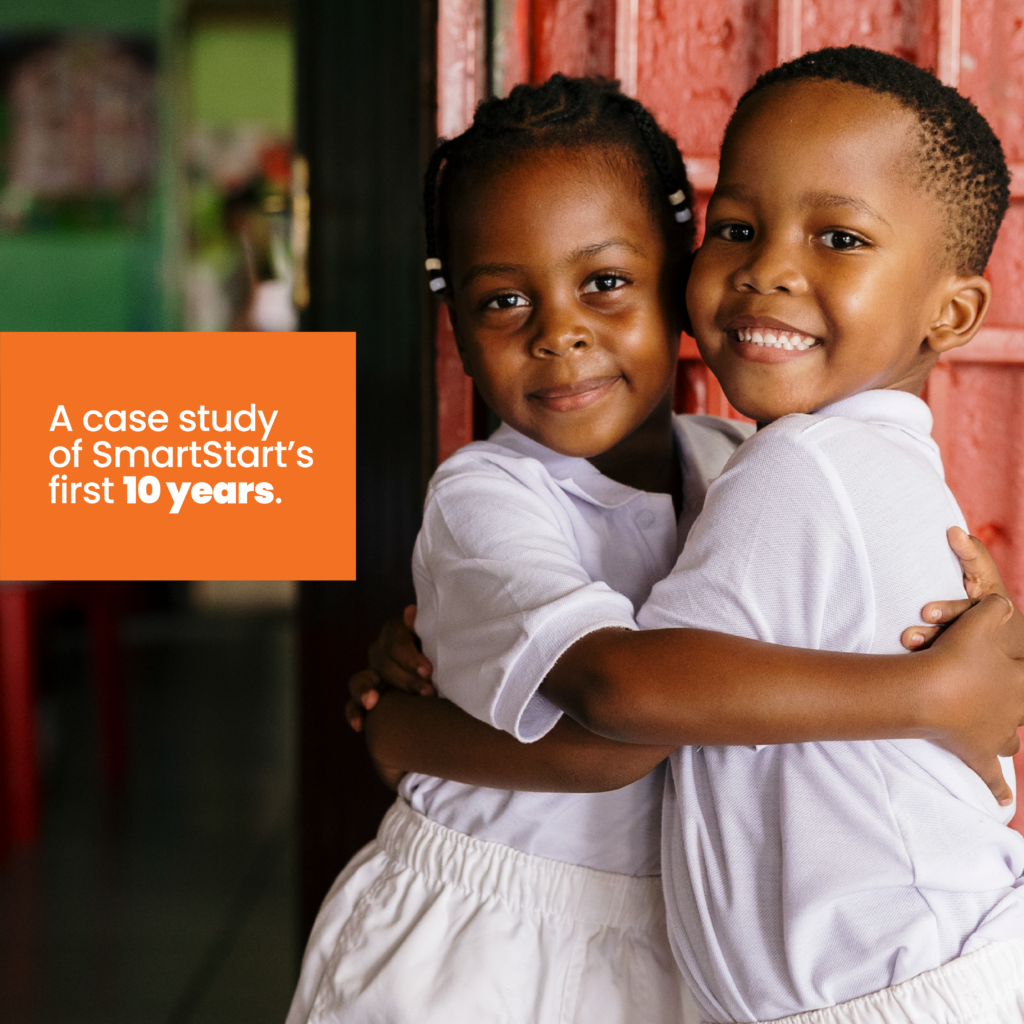
Every morning across South Africa, women open their homes and community spaces to children. They prepare meals, comfort a crying toddler, facilitate learning through play, reassure anxious parents and create the conditions in which children can learn, grow and feel safe.
Their work is often described as childcare. It is much more than that, however.
It is care work. It is early learning. It is employment, and, for many families, it is the infrastructure that makes everything else possible.
On International Day of Care and Support, we celebrate SmartStarters such as Phillistus Jaxa, Ntswaki Ramoleta, Zanele Mahlangu and Thandeka Jwente – women whose work shows how quality early learning can change the lives of children, strengthen families and create economic opportunity in communities.
Care that enables families to work
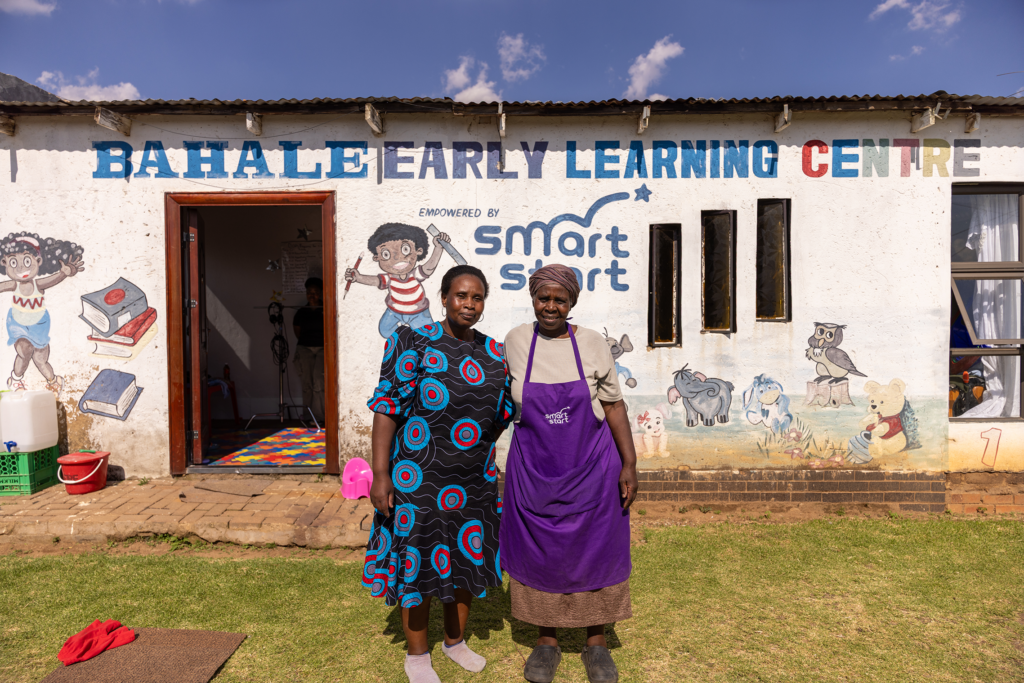
In Slovoville, Johannesburg, Phillistus Jaxa and her mother, Ntswaki Ramoleta, run Bahale Early Learning Centre together.
Before entering early learning, Phillistus ran a business with her mother selling fat cakes. When COVID-19 lockdowns disrupted their livelihood, both women found themselves without work. In 2021, Ntswaki was introduced to SmartStart and, after completing start-up training and meeting venue and compliance requirements, opened Bahale in 2022 with three children.
Phillistus joined her mother in 2023. Through door-to-door recruitment and word-of-mouth referrals, Bahale now serves 20 children.
For Phillistus, the work has become more than a livelihood.
“I love them. When I am with them, I become one of them,” she says.
Working alongside her mother has also strengthened their relationship. “It’s made our relationship stronger,” she says. “Even before starting a daycare centre, we were close, but the experience has brought us closer.”
Ntswaki agrees: “We work well together. I wanted to work with her because she is my daughter.”
Their centre is now full, and they have to turn families away because there is not enough space to meet demand. Yet their impact reaches beyond the children in their care. Through the provision of a safe, nurturing and stimulating place for young children, Bahale gives parents greater freedom to work, look for work and participate in community life.
Care that creates opportunity
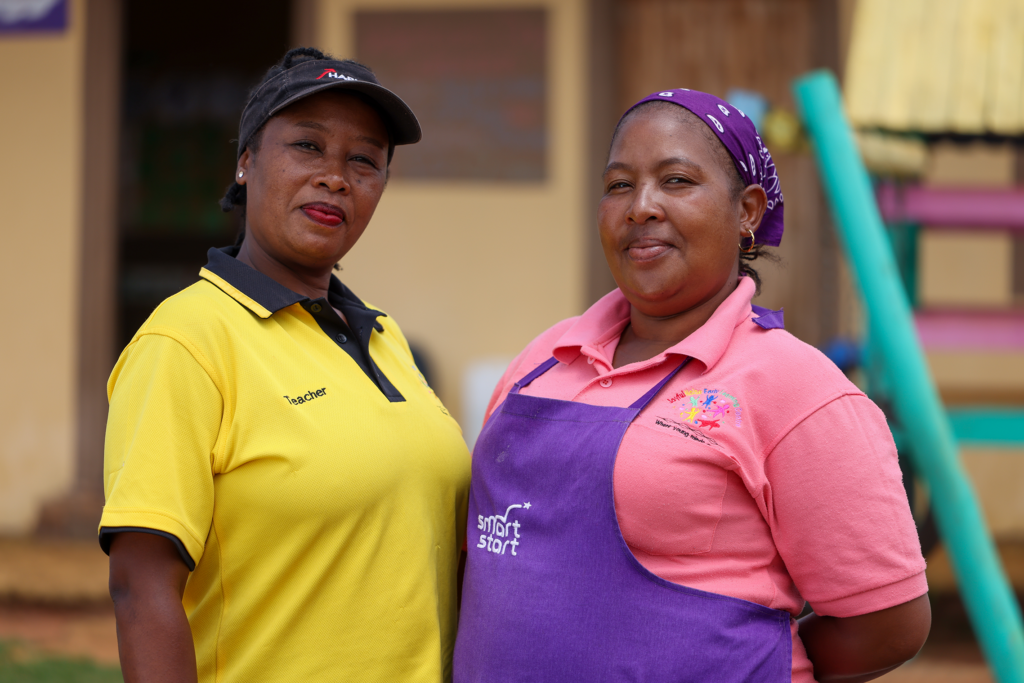
In Phelindaba, Zanele Mahlangu begins her day at 04:00AM, preparing breakfast for the 40 children enrolled at Joyful Noise Early Learning Centre.
Zanele had long been interested in working with children and previously worked as an assistant at a daycare centre. In 2022, she opened Joyful Noise on land she had originally intended to use to build her home. Today, she employs two people, including her older sister, Phindi, who joined the centre in 2023 after losing her job during the pandemic.
“My sister raised me; now I am the one picking her up,” Zanele says. “She is very supportive, and I am happy to be working with her.”
Zanele sees early learning as a way to change what is possible for children in her community. In Phelindaba, as in many informal settlements, families face significant social and economic pressures. Some parents may not fully understand the importance of early learning, while others struggle to access affordable, quality services.
Zanele responds by meeting families where they are. She brings children into the centre, nurtures their development and prepares them for school and the next stage of their lives.
“I am grateful to SmartStart because they have empowered me to make a difference in my community and in the lives of the children I meet daily,” she says. “Through this, I am able to put food on the table for my children. My wish is to provide top-quality early learning in Phelindaba, with parents trusting me with their children and knowing that their children are safe with me.”
Care that reaches children who might otherwise be missed
In Doornkop, Slovo Extension, Thandeka Jwente’s early learning journey began with a neighbour’s request.
In January 2024, a neighbour asked whether Thandeka could look after her daughter while she went to work. Soon, more parents asked if their children could come to her while they worked or searched for employment. As demand grew, Thandeka completed SmartStart training in April 2024 to strengthen her skills and build a sustainable early learning enterprise.
Today, Ikusasa Day Care Centre cares for, and nurtures the learning and development of, 11 children.
Doornkop is an informal settlement where access to services such as electricity, water and sanitation remains limited. Many families rely on social grants, and not all parents can afford early learning fees. Thandeka understands this reality. When she saw a child alone in the fields while her mother worked, she asked the mother to bring the child to her centre. When the mother explained that she could not afford the service, Thandeka welcomed the child anyway.
Thandeka has also employed an assistant to help prepare meals for the children. She wants to grow Ikusasa into a fully equipped centre with the resources children need to learn and play.
Her work shows what inclusive care can look like in practice: recognising a child’s need, responding with compassion and refusing to let poverty determine whether a child gets a strong start.
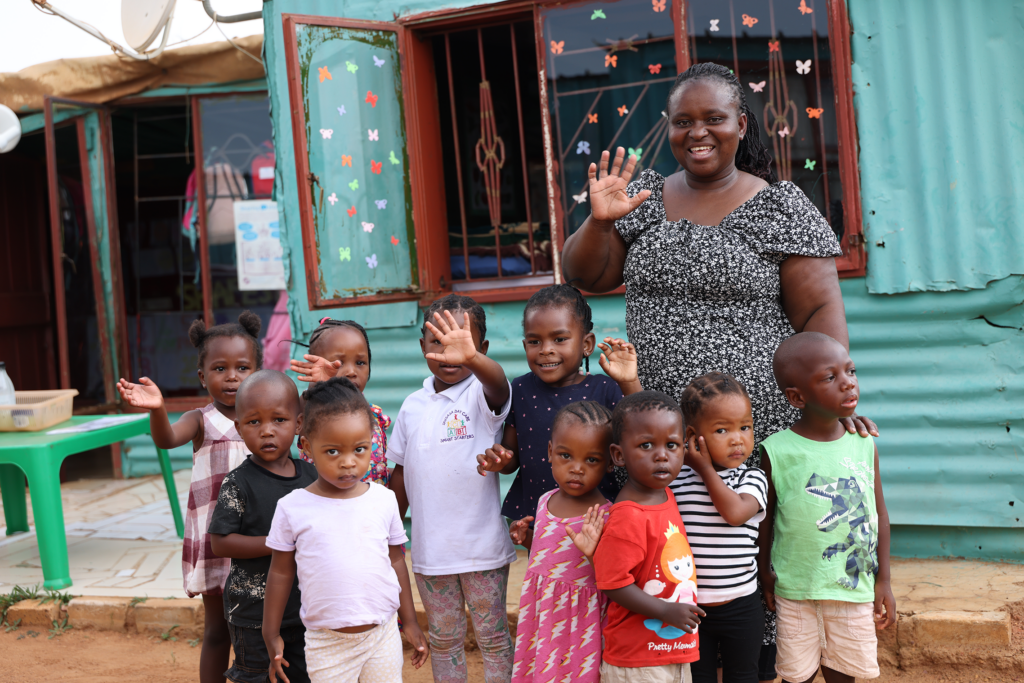
Care is infrastructure
These stories show why early learning and care must be understood as infrastructure.
When a practitioner opens a centre, she is not only creating a place for children to learn. She is enabling parents to participate in the workforce. She is creating employment. She is building trust in her community. She is helping children develop the confidence, language, relationships and curiosity they will carry into school and beyond.
Quality early learning gives children a stronger start in life. It also strengthens the care economy – the essential work, mostly carried out by women, that enables families, communities and economies to function.
SmartStart’s model is built on this understanding. In supporting practitioners to run affordable early learning programmes from home and community venues, SmartStart helps turn care into recognised, skilled and sustainable work. Its network of 16 000 practitioners reaches 190 000 children every week, while creating livelihoods and strengthening local economies.
A shared responsibility
Phillistus, Ntswaki, Zanele and Thandeka are not simply providing a service. They are responding to the needs of their communities with skill, resilience and care.
Their work reminds us that behind every child who arrives at an early learning programme is a family trying to make a life. Behind every family is a practitioner who shows up early, prepares food, teaches through play, holds a child’s hand and helps them believe they belong.
On International Day of Care and Support, we recognise the women who make this possible.
Care is not separate from development. It is not separate from the economy. It is not separate from education. Care is infrastructure, and investing in it is investing in every child’s future.