The early learning challenge is too big for any one organisation to solve alone.
That is why, in the Eastern Cape, two SmartStart franchisors have come together alongside like-minded organisations, government and other partners to launch the Eastern Cape ECD Regional Hub. The hub is not simply a new structure. Rather, it is a commitment to better coordination: bringing partners together, aligning support and making it possible for more children to access quality early learning.
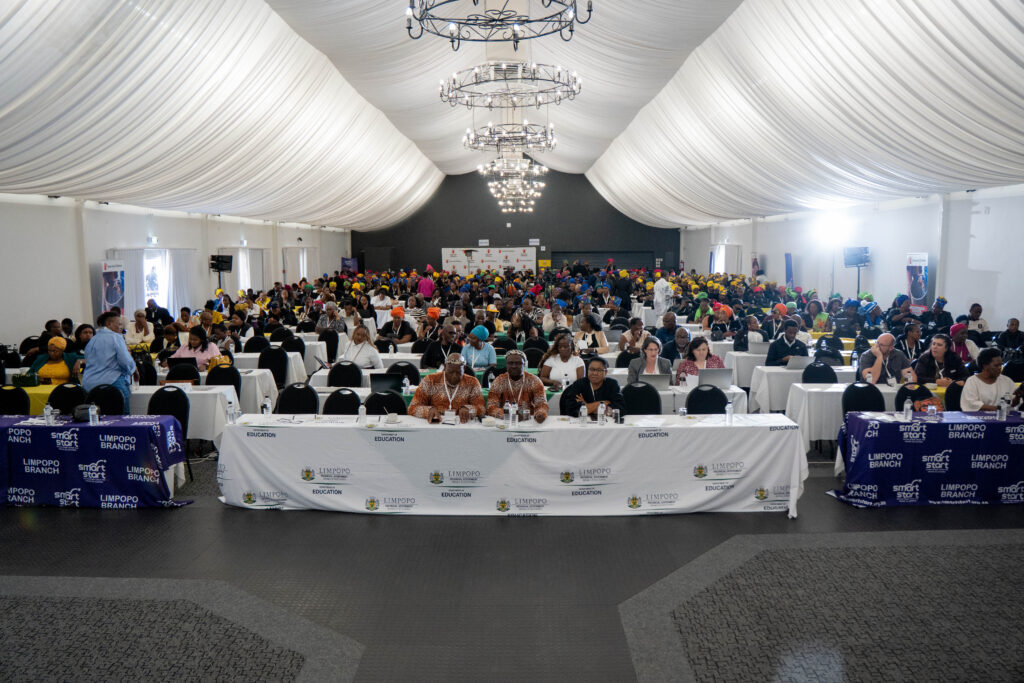
Khululeka and Siyakholwa gathered with NGOs, provincial government representatives, funders and community leaders to launch something harder to photograph than a building, but just as important: a regional hub for early childhood development whose first product is not a service, but coordination.
Stories of a “hub” launch often invoke an image of a ribbon-cutting: a new centre, a new programme, a new logo on a wall in KuGompo or Komani. This is not that type of story. Khululeka and Siyakholwa gathered with NGOs, provincial government representatives, funders and community leaders in the Eastern Cape to launch something harder to photograph than a building and, we believe, just as important: a regional hub for early childhood development whose first product is not a service, but coordination.
The truth that our sector does not always say out loud is that fragmentation has a cost. Organisations with the same mission sometimes work in the same villages, duplicating assessments, training and outreach. This is not intentional but often a response to symptoms of the same system and not looking fully at the whole picture.
The Eastern Cape makes this hard to ignore. It is one of South Africa’s most rural provinces, and many children still live outside registered, well-supported early learning provision. Against this scale, a siloed approach to addressing some of these challenges will not yield the desired outcomes in the long term.
That is why two franchisors came together around a shared conviction: the scale and complexity of this problem cannot be solved alone. Not by us nor by government alone. In fact, not by any one of us.
The hub has four jobs:
• Reduce duplication: align who does what, and where, so scarce resources go further.
• Align systems and data: build a shared evidence base so decisions respond to need, not habit or territory.
• Strengthen provincial capacity: connect NGOs, government departments and communities into one working ecosystem, rather than parallel silos.
• Build sustainability: create coordination that can outlast a single project, donor cycle or political term.
The hub is deliberately a platform, not an institution. Its value lies in removing friction between people and organisations that already care, already work and already know the terrain.
One of the most important ideas to come out of this gathering is a challenge to the deficit frame that often shapes conversations about ECD rural contexts. The Eastern Cape’s rural character is frequently described only as an obstacle: distance, poverty, infrastructure gaps. At the launch, the general tenor from all speakers was that the opportunities exist and that rural realities can be transformed into opportunities.
Decentralised networks of community-run early learning, women-led micro-enterprises and local knowledge that no head office can replicate are real strengths. A well-coordinated hub does ignore rural complexity but rather helps turn it into a delivery advantage.
The ideas that underpin the hub are, broadly, aimed at chipping away some of the systemic drivers of exclusion across the province. For the children for whom this hub exists, they will experience it in simpler ways: a practitioner who receives training instead of being missed; a centre that becomes registered instead of excluded; a mother who finds a place for her child where none existed before. This is the version of “no child left behind” that must live in all of us as a working agreement.
The hub now moves from launch to labour: mapping the ecosystem, aligning data standards and establishing the partnership governance needed to hold us to the commitments made this week.
To the NGOs, officials, funders and community leaders who joined us: thank you. The hub belongs to all of us. It will only work if we make it work.