South Africa has made real progress in early learning. However, more than one million children aged three to five still do not have access to an early learning programme. The question is no longer only whether quality early learning matters. It is how we build a system that can reach every child, in every community, without compromising quality.
A new 10-year case study, The Opportunity to Thrive: Growing the SmartStart Early Learning Platform, explores how SmartStart has evolved from an experiment in community-based early learning into part of a much larger national effort to achieve universal access by 2030.
A triple benefit
At the heart of SmartStart’s work is a simple but powerful idea: early learning creates a triple benefit.
- Children receive nurturing care, play-based learning and a stronger foundation for school and life.
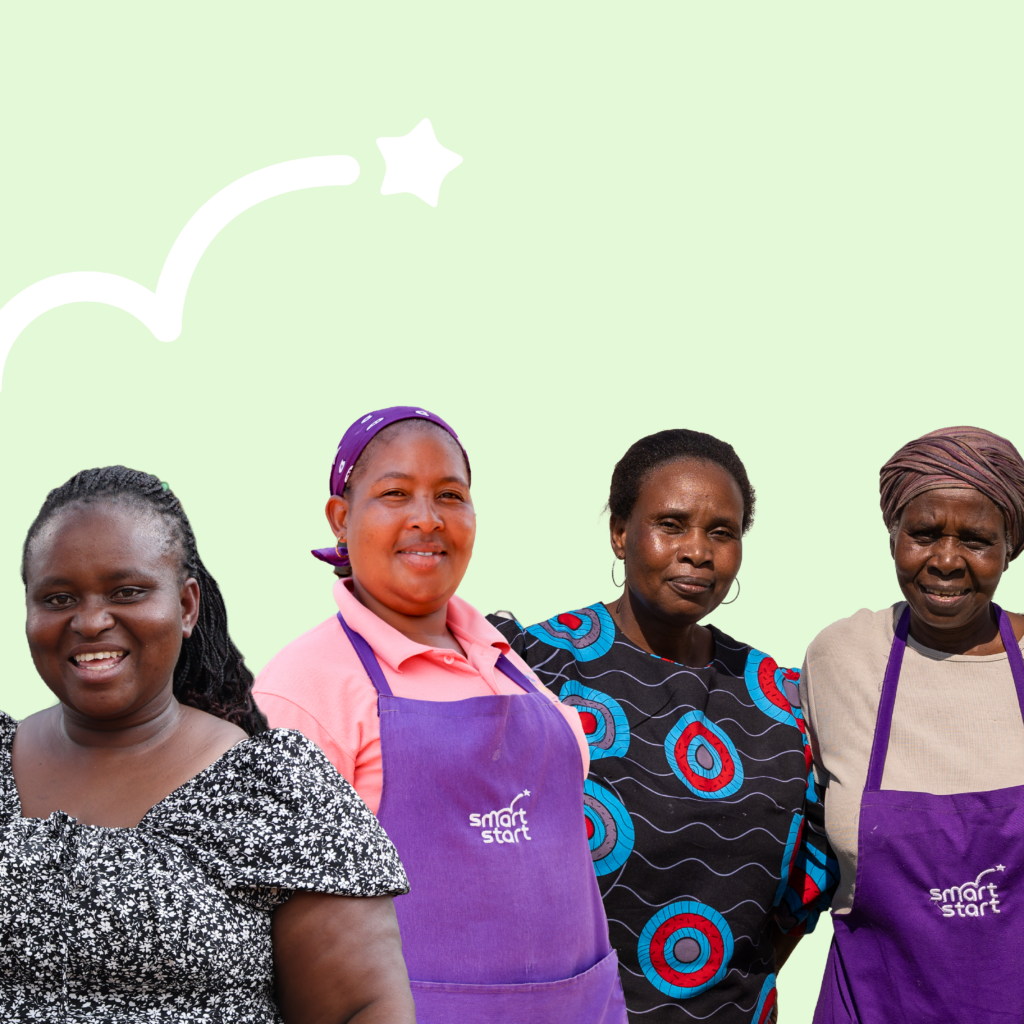
- Women build sustainable livelihoods as skilled early learning practitioners and micro-enterprise owners.
- Parents and caregivers gain reliable care that enables them to work, study and participate more fully in the economy.
This is why early learning should not be treated as a social expense. It is infrastructure: it supports children today, strengthens families and communities, and helps build the workforce of tomorrow.
From pilot to platform
SmartStart began in 2015 with a vision to give one million children access to quality early learning. Its first model was a part-time playgroup, designed to offer a practical, affordable way to reach children in underserved communities.
The early results were encouraging. An independent evaluation found that the proportion of children meeting the ELOM age-progression standard increased from 32% at baseline to 62% at endline. SmartStart also learned that a part-time model did not fully meet families’ needs. Parents wanted full-day care, and fees alone could not sustain quality programmes in low-income communities.
So SmartStart adapted.
We expanded beyond playgroups to include day mothers and standalone early learning centres. We invested in training, coaching, quality assurance, technology and business support. We also shifted from simply growing a network to building the systems needed to support quality at scale.
Quality and scale can go together
By 2024, SmartStart was supporting 13 partners, 11 000 practitioners and more than 98 000 children every week. By 2025, that network had grown to 16 000 practitioners reaching more than 200 000 children weekly.
The evidence suggests that this growth has not come at the cost of quality. In the 2023 evaluation, 65% of children in SmartStart programmes were developmentally on track. The proportion of children classified as “falling far behind” nearly halved, and the gap between the poorest and wealthiest households narrowed from 25% to 6%.
Coaching mattered. The evaluation found that more frequent and higher-quality coaching visits were associated with stronger programme quality and better child outcomes.
The next chapter is shared infrastructure
SmartStart’s next phase is perhaps our most important shift yet.
Rather than seeking to grow a larger organisation, SmartStart is reimagining its role as a steward of shared national infrastructure. We are exploring how tools, training, data, processes and knowledge developed over the past decade can be opened up for use by provinces, regional organisations, independent practitioners and other ecosystem partners.
This does not mean making every programme identical, but creating shared foundations so that many different actors can move in the same direction: towards quality early learning for every child.
The Bana Pele Shared Blueprint, developed through collaboration between government, civil society and the private sector, reflects this shift. It recognises the diversity of South Africa’s early learning landscape, including home-based programmes, and places children and practitioners at the centre of a collective effort.
Why this matters now
The opportunity is real. Political will has grown, the ECD function has moved to the Department of Basic Education, and significant public investment is beginning to follow. However, funding alone will not close the gap.
South Africa needs coordinated action across government, civil society, funders, practitioners and communities. It needs systems that support practitioners rather than exclude them. It also needs a shared understanding that care is not peripheral to the economy but rather foundational to it.
The case study captures a decade of learning about what it takes to build that system: start with communities, listen to families, invest in practitioners, use evidence to improve, and design for collaboration rather than competition.